Is A Brighton Condo Or Townhome Right For You?
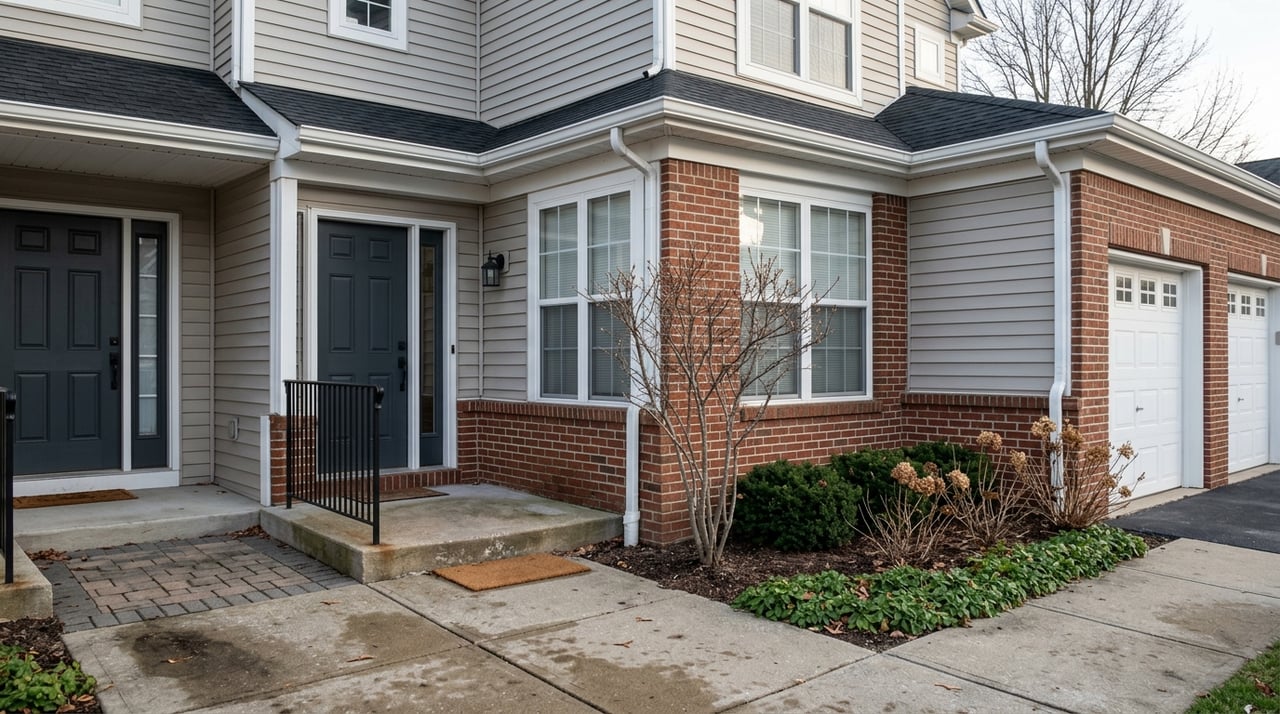
Wondering whether a Brighton condo or townhome is the smarter fit for your next move? If you want less upkeep, predictable monthly maintenance, or a more streamlined lifestyle, attached-home living can be very appealing. At the same time, not every condo or townhome in Brighton works the same way, and the details matter more here than many buyers realize. This guide will help you compare the tradeoffs, ask better questions, and narrow down what fits your budget and day-to-day life. Let’s dive in.
Brighton has a housing story that shapes your options. The town is largely built out and, aside from a few parcels, is considered completely developed according to the town historian. That helps explain why attached-home communities are such a visible part of the local market.
In practical terms, condos and townhomes can open doors in a community where new land is limited. The Reserve on the Erie Canal says its project grew out of a shortage of land and new construction in Brighton, which reflects a broader local reality. If you want to live in Brighton without taking on the full maintenance of a detached home, these property types deserve a close look.
A condo and a townhome may look similar from the outside, but the ownership structure can be very different. In New York, condo ownership typically means you own your unit plus a percentage interest in the land, building, common areas, and amenities.
A townhome is more of an architectural style than one fixed legal structure. In Brighton listings, attached homes may be labeled condo, townhouse, or condo-townhouse. That means you should verify the deed and association documents instead of assuming the exterior appearance tells the whole story.
The legal setup affects your monthly costs, maintenance responsibilities, insurance needs, and rules for using the property. It can also affect financing, especially if a lender reviews the association’s finances or owner-occupancy mix.
If you are comparing two similar-looking attached homes in Brighton, one may function more like a condo with broad association responsibility, while the other may place more repair and exterior responsibility on you. That is why document review is such an important step before you commit.
Condo associations often collect monthly assessments to cover shared costs. Depending on the community, that can include common area maintenance, insurance, reserve contributions, snow removal, trash, water, sewer, and amenities like a pool or clubhouse.
Associations can also enforce rules. These may cover pets, parking, renting, renovations, and noise. The New York Attorney General recommends reviewing governing documents carefully and understanding the association’s finances, reserve fund, and special-assessment history before buying.
Townhomes often appeal to buyers who want an attached-home feel with a more house-like layout. In many cases, that can mean more square footage, multiple levels, and features like a garage.
Still, maintenance responsibility varies from one development to another. Some townhome communities operate very much like condos, while others shift more upkeep to the owner. In Brighton, that means you need to confirm exactly who handles the roof, siding, windows, driveway, and exterior grounds.
Brighton’s attached-home market includes both older, more established communities and newer options with a different price point and amenity mix. Looking at local examples can help you picture what that range looks like.
Eastbrooke represents one end of the spectrum. A recent listing at 502 Eastbrooke Lane showed a 2-bedroom, 1.5-bath condo with 968 square feet, built in 1972, and a monthly HOA fee of $298. That fee included common area maintenance, insurance, sewer, snow removal, trash, and water, and the community offered a clubhouse, pool, and tennis courts.
The Reserve on the Erie Canal reflects a newer attached-home option in Brighton. A record for 232 Bretlyn Circle showed a 2016-built 3-bedroom, 3-bath condo with a monthly HOA fee of $544 and a 2-car garage. The community also includes walking and biking paths, waterfront access, and a clubhouse according to the developer.
When you compare a condo or townhome to a detached house, the biggest monthly difference is often the HOA fee. In Brighton examples, that range can vary quite a bit, from around $298 per month in an older condo community to $544 per month in a newer one.
A higher monthly fee is not automatically bad, and a lower fee is not automatically better. What matters is what the fee covers, how well the association is funded, and whether the overall ownership experience fits your priorities.
You will want a very clear list of included items. Common questions include whether the fee covers:
A community with broader coverage may simplify your life and reduce surprise maintenance tasks. On the other hand, if the fee covers less, your monthly number may look lower while your out-of-pocket responsibilities are higher.
The monthly fee is only part of the story. You should also ask whether the association has healthy reserve funds and whether there is a history of special assessments.
That matters because underfunded reserves can lead to future cost surprises. The New York Attorney General specifically advises buyers to review reserve funds, special assessments, and the rules tied to repairs, common elements, and subletting.
Property taxes are another key part of the comparison. Monroe County lists the 2026 Brighton town-and-county tax rate at 15.185726 per $1,000 of assessed value. For the 2025-2026 school year, the Brighton school district tax rate is listed at 28.707606 per $1,000.
There is an important local detail to keep in mind. Brighton spans five school districts: Brighton, Penfield, Pittsford, Rush-Henrietta, and Wheatland-Chili. If you are budgeting carefully, verify the school district for the exact address instead of assuming all Brighton properties fall into the same district.
Brighton’s assessor notes that condominium assessments are handled differently from other property types. Condos are valued as if the entire complex were sold as a single entity, and then each unit is assigned a percentage-based value.
The town also notes that this can leave a condo unit assessed below its likely market value, even on a roll at 100 percent. That does not automatically make one property a better deal than another, but it is a local factor worth understanding as you compare tax bills and pricing.
For many buyers, the right choice comes down to how you want to spend your time and what kind of ownership experience feels comfortable.
A condo may be a strong fit if you want a lower-maintenance, lock-and-leave lifestyle. It can also work well if you like shared amenities and do not mind living within a more structured set of association rules.
A townhome may be a better fit if you want an attached-home layout that feels a bit more like a house. You may get more space, multiple floors, or a garage, but the maintenance setup can vary, so it is important to confirm the details.
A detached single-family home still offers the most control over the property and lot. It may also mean more privacy, but it usually comes with more upkeep and full responsibility for exterior maintenance.
Before you buy a Brighton condo or townhome, use this checklist to stay focused on the details that matter most:
In Brighton, condos and townhomes are not one-size-fits-all options. They sit on a spectrum of maintenance, amenities, cost structure, and association governance, and that spectrum is especially important in a built-out market with a mix of older communities and newer developments.
If you want less exterior upkeep and a simpler day-to-day routine, a condo could be a smart move. If you want an attached-home feel with a little more house-like space, a townhome may be the better match. The right answer comes from looking past the label, reviewing the documents carefully, and weighing the real monthly cost against the lifestyle you want.
If you are comparing Brighton condos, townhomes, or single-family homes and want a clear, local perspective, Amy Petrone can help you sort through the fine print and find the option that fits your goals.

August 27, 2026
August 20, 2026

August 13, 2026
August 6, 2026
August 6, 2026

July 23, 2026
July 16, 2026
July 9, 2026
July 2, 2026
When you hire us you get all the services and advantages of a big team plus the one-on-one customer service of a boutique firm. We take pride in our client relationships and our accessibility!