Architectural Styles You’ll See Around Brighton
If you have ever driven through Brighton and thought, these streets feel consistent, but the homes do not all look the same, you are seeing one of the town’s defining features. Brighton grew in layers, with early suburban tracts, prewar houses, and postwar neighborhoods all shaping the look of the community. That mix gives you a better sense of what to expect as a buyer or seller, and it can also help you appreciate what makes one home stand out from another. Let’s dive in.
Brighton is an inner-ring suburb with a long history of suburban development dating back to the early 20th century. Town history notes that areas like the Houston Barnard tract, Homeacres, and Roselawn were already completed or underway by the 1920s, and the town is now considered essentially built out except for a few parcels.
That history matters because Brighton was not built all at once. Its visual character comes from a combination of building age, architectural style, street patterns, mature trees, and landscaping. In other words, when you tour Brighton, you are not just looking at houses. You are also taking in streetscapes that evolved over decades.
Current profile data show 17,010 housing units in Brighton, with 62% in single-unit structures and 56% owner-occupied. Detached homes still form the backbone of the market, which is one reason classic suburban architecture remains such a big part of the town’s identity.
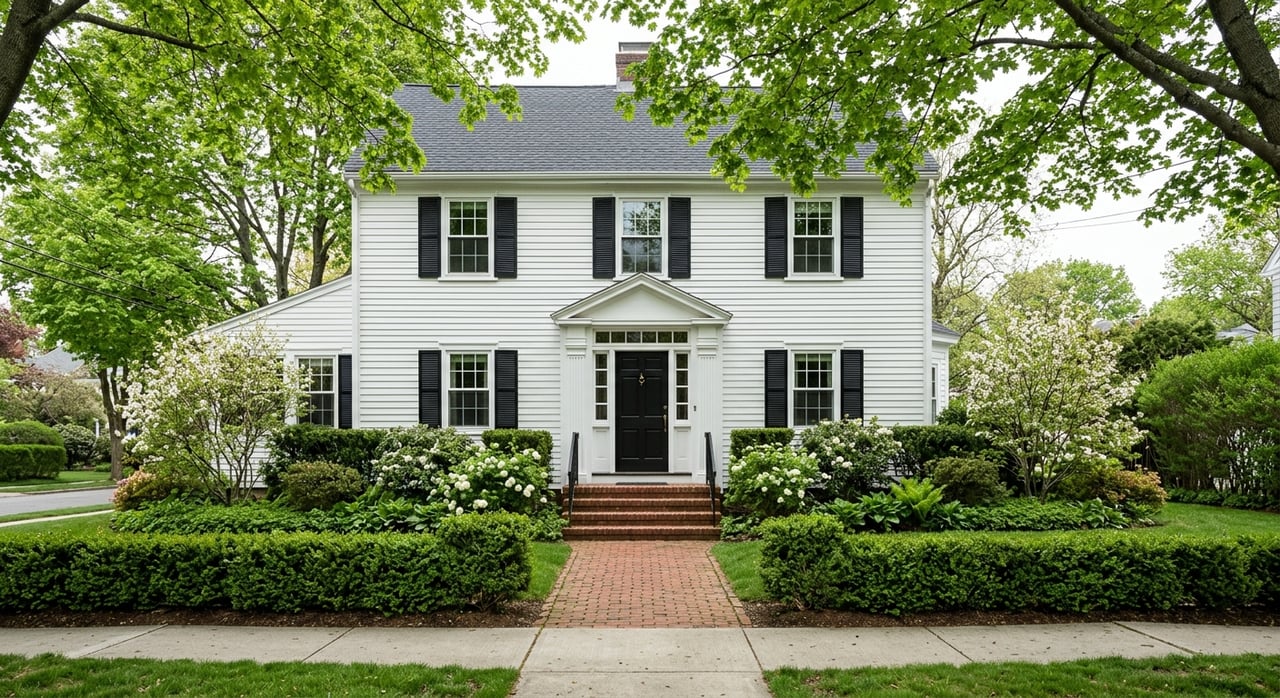
Colonial Revival is one of the most recognizable older styles you will see around Brighton. This style was common through the 1950s and is usually marked by a symmetrical shape, a central porch or portico with columns, a low-pitched roof, and decorative window details.
From the street, these homes often feel orderly and traditional. Their balanced layout gives them a centered, formal presence that many buyers still associate with the classic suburban home.
Brighton’s early suburban growth helps explain why this style is still so visible. By the 1920s, development was already moving along corridors like Monroe Avenue, East Avenue, and West Henrietta Road. In the Council Rock area, pre-World War II advertising even highlighted Tudor Revival and Colonial Revival homes, which shows how strongly these traditional forms were tied to Brighton’s early identity.
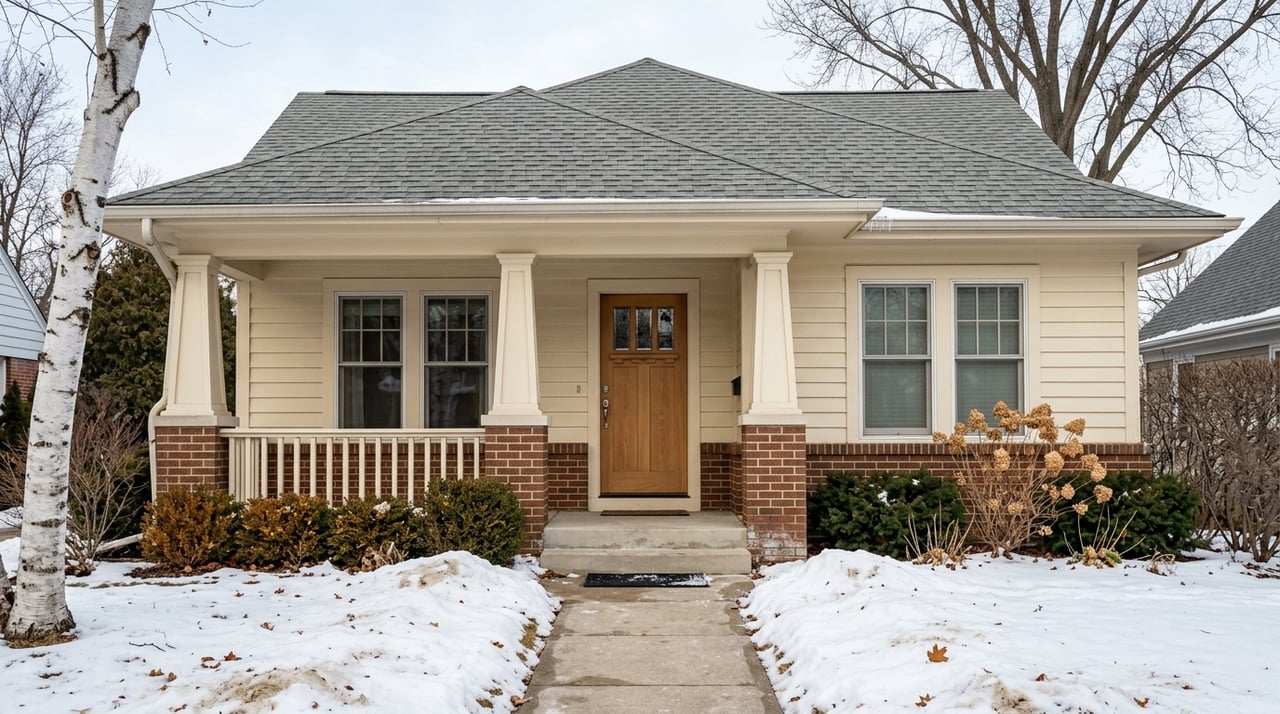
If Colonial Revivals feel formal, bungalows usually feel more relaxed and close to the ground. Craftsman bungalows are typically one story, with low-pitched gable roofs, exposed rafters or braces, and full or partial porches supported by squat or tapered posts.
These homes were often designed for modest lots and efficient living. That gives them a cozy, practical quality that still appeals to buyers who like charm, usable porches, and a more intimate scale.
In Brighton, bungalow-era homes help add texture to older neighborhoods. They may not dominate in every area, but they are part of the town’s prewar housing story and contribute to the layered look that makes Brighton feel established rather than uniform.
Another style worth knowing is the American Foursquare. These homes are common in Rochester-area neighborhoods and often stand out for their boxy shape, full porches, central dormers, and two-and-a-half-story massing.
Foursquares can feel like a bridge between more decorative prewar homes and simpler later styles. Some include Craftsman or Mission details, which adds visual interest without losing the straightforward, practical shape that defines the style.
If you are touring older parts of Brighton, a Foursquare may catch your eye because it reads taller and more vertical than a bungalow. It also tends to have a sturdy, balanced look that fits naturally into mature streetscapes.
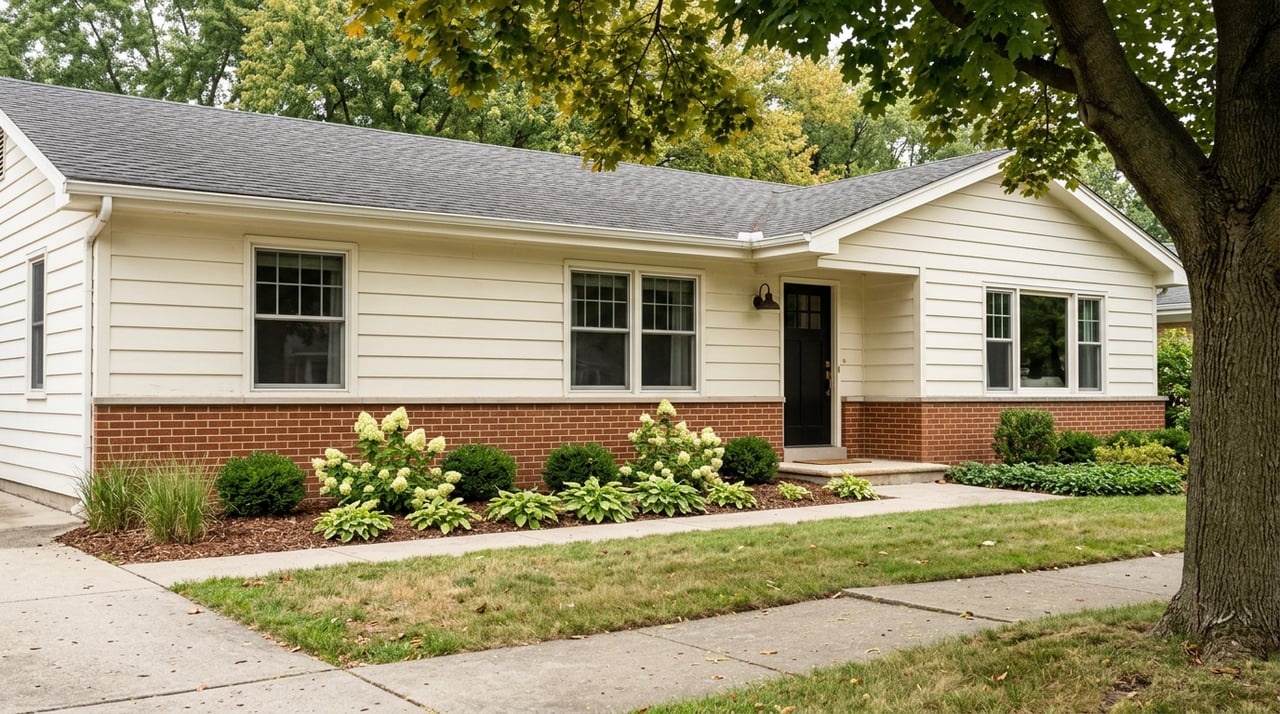
Brighton’s postwar neighborhoods are where ranch houses become especially noticeable. In Council Rock Estates, for example, the south end was built mostly in the 1950s and 1960s and is dominated by one-story ranch homes, with some split-levels and Colonial Revivals mixed in.
The ranch style became popular nationwide after World War II. Its key features include an asymmetrical facade, low-pitched roof, wider eaves, and a strong horizontal look. Most ranch homes are one story, and they were widely embraced because they matched a more informal way of living.
In Brighton, ranch homes often feel casual, easy to navigate, and connected to the yard. Compared with a Colonial Revival, they usually project less formality and more everyday flow.
Not every mid-century Brighton home is a standard ranch. Some neighborhoods also include split-levels, and the town’s mid-century housing stock can show more design variation than buyers expect.
The Council Rock survey notes that architect Thomas W. Boyde Jr. designed many Brighton homes in the 1950s and 1960s. His work often used Ranch, split-level, and Colonial Revival forms, and some homes included details like square porthole windows, decorative wrought iron, built-in planters, curved interior walls, and smooth wood or glass finishes.
That is a helpful reminder if you are house hunting in Brighton. Even within one era, homes can vary quite a bit in layout and personality. A ranch may be simple and straightforward, or it may have custom features that make it feel more architect-driven.
Architecture shapes daily life in subtle ways. Colonial Revival homes often present a more formal and centered appearance because of their symmetry and traditional entry treatment. Bungalows tend to feel smaller-scale, porch-forward, and more intimate.
Ranch homes usually feel open, horizontal, and easy to move through. Those are not hard rules for every house, but they are useful style-based impressions when you are comparing homes in person.
If you are trying to identify a style quickly, focus on a few visual cues first. Roof shape, porch design, window rhythm, and whether the house reads as vertical or horizontal from the street can tell you a lot.
In older Brighton homes, original windows, porches, trim, and roof details can be an important part of the home’s character. On bungalows especially, replacement windows may reduce the visual integrity of the original design. On Colonial Revivals, mismatched replacements can stand out because symmetry is such a key part of the facade.
For ranch homes, the maintenance conversation often shifts. Because they are generally one story with low-pitched roofs, attention often centers on roof condition, drainage, eaves, windows, and how later additions connect to the original house and garage areas.
If you are buying, these details can help you understand not just how a home looks, but how it may function and age over time. If you are selling, understanding which features define your home’s style can help you present it more thoughtfully in photos, showings, and marketing.
Brighton also has a local preservation framework that can matter for some properties. The town’s Historic Preservation Commission handles landmark designations, certificates of appropriateness, hardship applications, and recommendations related to demolition matters.
Brighton’s comprehensive plan also notes that the Architectural Review Board examines exterior design issues in new development. For homeowners, the practical takeaway is simple: if a home is historically designated or retains especially intact exterior features, proposed changes may carry more review implications than a typical suburban update.
That does not mean every exterior project is complicated. It simply means that character and context matter in a town where architecture is part of the community’s identity.
What makes Brighton especially interesting is not one dominant style. It is the way prewar Colonials, bungalow-era homes, Foursquares, ranches, and split-levels all fit into the same broader suburban story.
Mature trees, established landscaping, and layered development tie those eras together. That gives Brighton a visual variety that feels grounded and lived-in, which is often exactly what buyers are looking for in an established suburb.
If you are considering a move in Brighton, understanding the local architecture can help you narrow your search, notice value in different home types, and better understand how each property fits into its street and setting. And if you are getting ready to sell, it can help you frame your home’s story in a way buyers immediately understand.
If you want help buying or selling a home in Brighton with a team that understands how neighborhood character shapes value, connect with Amy Petrone.
August 20, 2026
August 13, 2026
August 6, 2026
August 6, 2026
July 23, 2026
July 16, 2026
July 9, 2026
July 2, 2026
June 25, 2026
When you hire us you get all the services and advantages of a big team plus the one-on-one customer service of a boutique firm. We take pride in our client relationships and our accessibility!