The Real Reason Brighton's Highest Tax Bill Hasn't Cooled Its Housing Market
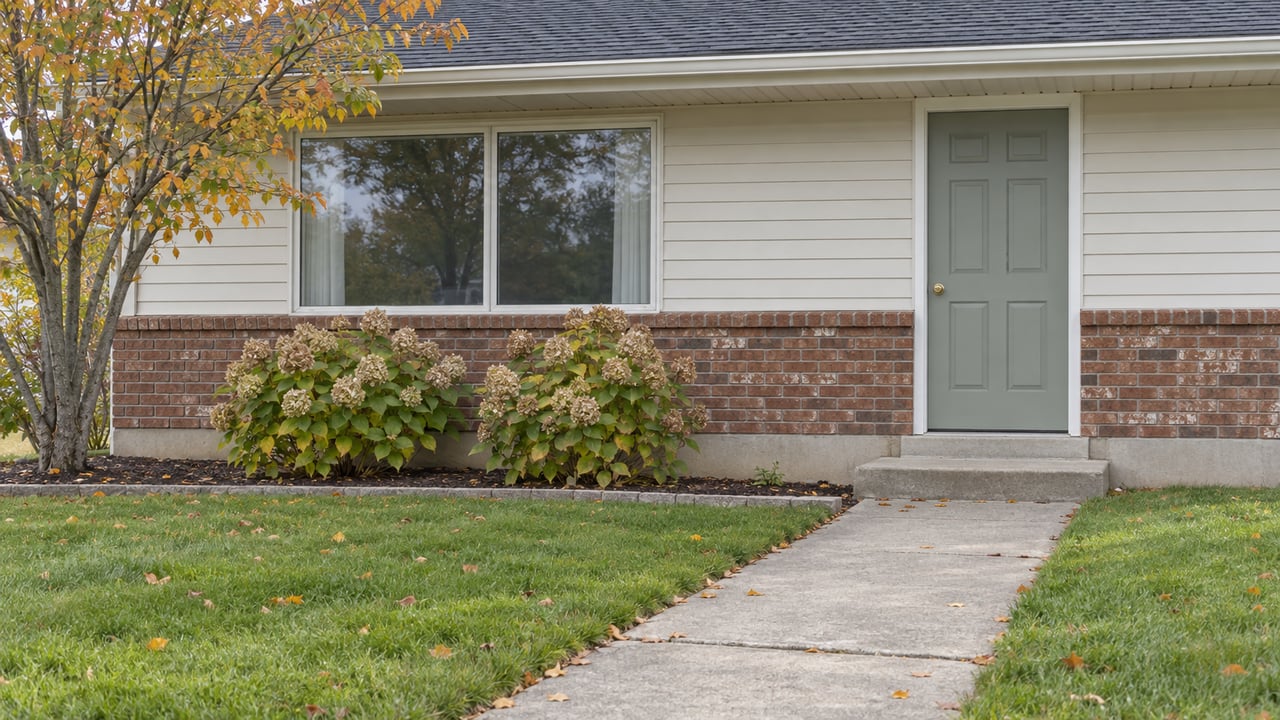
Two colonials near Twelve Corners can carry nearly identical tax bills and send two different kids to two different school districts. One buyer assumes "Brighton" means Brighton Central Schools. The other finds out at closing that their address feeds into Penfield, Rush-Henrietta, or Pittsford instead. Both paid Brighton's tax rate. Only one bought what they thought they were buying.
That gap, between what the town's name implies and what a specific parcel actually delivers, is the piece of this market that a tax rate or a median price can't show you on its own.
Brighton's property tax burden isn't a secret. Ownwell's assessment data puts the town's effective property tax rate at 2.95 percent, compared to a New York state median of 1.90 percent and a national median of 1.02 percent. On a typical Brighton home, that works out to a median annual bill of $7,621, more than three times the national median tax bill of $2,400.
Any buyer who runs a mortgage calculator sees this number early. It's baked into every listing sheet and every closing disclosure. It is not the part of Brighton's market that surprises anyone who's done their homework.
Here's what a tax bill that high should do to demand: cool it. Slow it down. Push buyers toward towns with lower carrying costs.
Brighton's market hasn't gotten the memo. As of August 2026, homes here carried a median list price of $399,000 and moved in a median of just 13 days, the same brisk pace as August 2025. Closings from the past two weeks show the range that pace covers. A three-bedroom home on Penfield Road sold for $495,000 on September 21. A larger home on Barclay Square Drive closed the same day at $925,000. A smaller property on Elwell Drive also went for $355,000 that day. None of these sat on the market long enough to suggest buyers are pausing over the tax bill.
The Town of Brighton's own budget message, prepared in September 2025 as it built the 2026 fiscal year plan, points at part of the answer. It described "a severe lack of inventory of residential homes in Brighton" as a factor behind tight mortgage tax revenues at the time, the same kind of scarcity that keeps buyers moving fast whenever something they want comes on the market. Scarcity, not tax comfort, is doing a lot of the work here.
The other part of the answer sits in a detail most buyers never check until they're deep in a search: the Town of Brighton and the Brighton Central School District are not the same shape.
Brighton Central School District serves roughly 3,800 students across four named schools: Council Rock Primary School, French Road Elementary School, Twelve Corners Middle School, and Brighton High School. It has carried real weight in the region's school conversations for years, including a #56 national ranking from U.S. News & World Report back in 2007, at the time the highest of any school in Monroe County.
But BCSD only serves portions of the towns of Brighton and Pittsford. The Town of Brighton's own website lists four other districts that also serve pieces of the town: Penfield Central, Pittsford Central, Rush-Henrietta Central, and Wheatland-Chili Central.
These aren't small technical exceptions. Rush-Henrietta's reach into Brighton traces back to a 1954 annexation of what was then Brighton Common School No. 4. Penfield's northeastern slice absorbed the old Indian Landing School the same year. Pittsford Central annexed the Allen Creek School into its own boundaries back in 1958. The lines were drawn decades before most of today's subdivisions existed, and they haven't moved to match the neighborhoods that grew up around them since.
For a buyer comparing Brighton to Pittsford or Penfield on a portal, the town-wide tax rate looks like the headline number to weigh. It isn't, at least not on its own. A parcel taxed at Brighton's rate might already sit inside Pittsford Central School District's boundary, which also serves the towns of Pittsford, Perinton, Penfield, Mendon, and part of Victor. Another parcel a few streets over, taxed at the same rate, feeds into Rush-Henrietta instead.
That means two of the "Brighton" comparisons a buyer might run side by side, one against a Pittsford listing and one against a Penfield listing, could turn out to describe the exact same school district on both sides of the ledger. The town line on a map and the school assignment on a specific address are two different questions, and only one of them shows up on a listing sheet by default.
This is the friction that surfaces during a transaction rather than during a search. A buyer who fell for "Brighton" as shorthand for BCSD needs to confirm, parcel by parcel, whether the address they're bidding on actually delivers that. The Town of Brighton's assessor's office fields exactly this kind of inventory question, and the district assignment for any specific address is a matter of public record, not a judgment call.
Layer the district question on top of the scarcity the town's own budget message describes, and the pace makes more sense. Buyers aren't just racing the clock because good Brighton listings are rare. They're often racing it while still unsure exactly which school zone they're locking in, because the property card and the school assignment aren't always presented together, and the 13-day median doesn't leave much room to double check.
That combination, tight supply plus a boundary question that isn't obvious from the street, is a large part of why a market carrying the region's highest tax rate hasn't slowed down. The premium isn't purely a school-quality premium. It's partly a premium on getting the answer right before somebody else does.
Does every home in the Town of Brighton feed into Brighton Central School District? No. Portions of the town are zoned into Penfield Central, Pittsford Central, Rush-Henrietta Central, and Wheatland-Chili Central instead, based on boundary lines that in some cases date back to the 1950s.
Can I find out which district a specific address is zoned for before I write an offer? Yes. The Town of Brighton's assessor's office and the individual school districts can confirm zoning for a specific parcel, and this is worth checking before comparing tax bills or prices across town lines.
Does the high tax rate mean Brighton is a harder sell than nearby towns? The current data doesn't support that. Homes in Brighton moved in a median of 13 days as of August 2026, matching the same month a year earlier, and the town's own 2025 budget planning flagged tight inventory as an ongoing driver of that pace.
If you're weighing a Brighton address against something in Pittsford or Penfield and want the actual school assignment checked before you get attached to a listing, Amy Petrone can pull that answer for a specific parcel and tell you plainly what it means for your search.
October 15, 2026
October 8, 2026
October 1, 2026
September 24, 2026
September 17, 2026
September 10, 2026
September 3, 2026

August 27, 2026
August 20, 2026
When you hire us you get all the services and advantages of a big team plus the one-on-one customer service of a boutique firm. We take pride in our client relationships and our accessibility!