Relocating to Rochester: Housing Guide for Work Moves
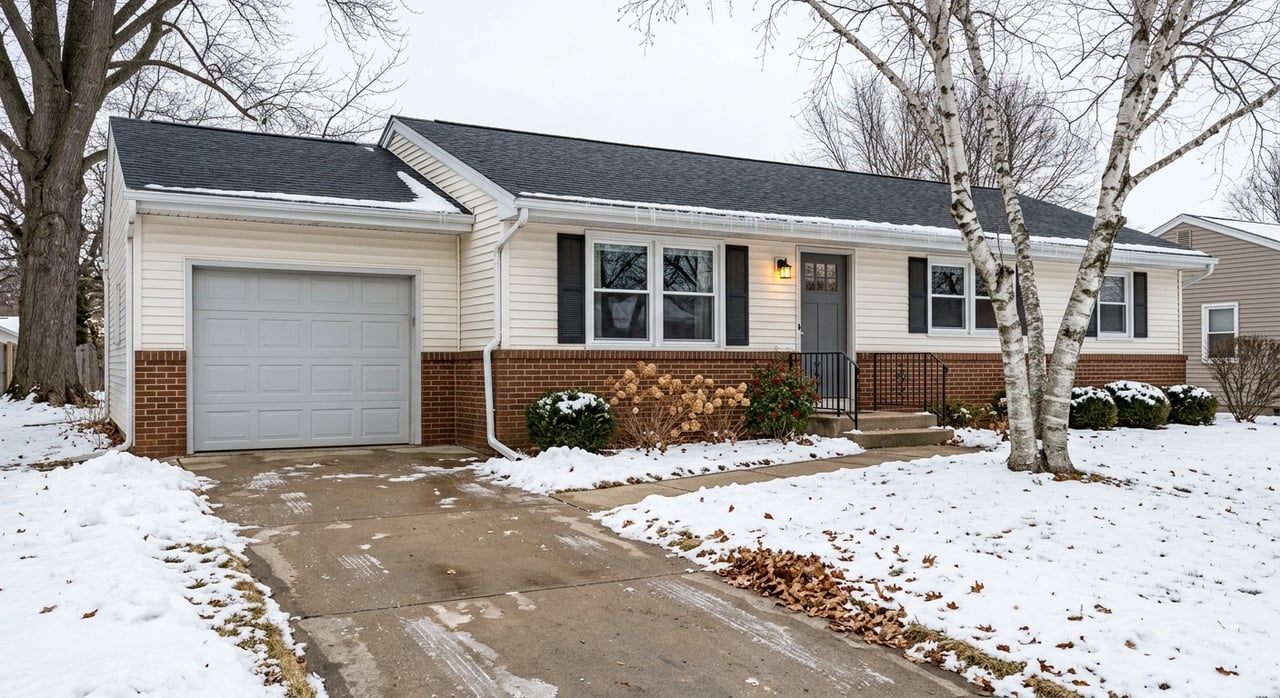
Thinking about a job move to Rochester? You may be pleasantly surprised by how much home your budget can stretch here, but that does not mean the search will be easy. Rochester remains relatively affordable compared with many metros, yet current data still point to a competitive market with limited inventory and fast-moving listings in some areas. This guide will help you understand price ranges, commute patterns, neighborhood options, and what to expect from the buying process so you can make a smart move with less stress. Let’s dive in.
If you are relocating for work, Rochester offers a rare mix of relative affordability and manageable commutes. According to Realtor.com’s January 2026 Rochester market summary, the city had a median home price of $174,900, 921 homes for sale, and a median 42 days on market, and it was classified as a seller’s market.
Other data sources show a wider pricing range, which is common because each one measures the market differently. Redfin’s February 2026 snapshot put the median sale price at $160,000, while Zillow’s home value index showed an average home value of $224,940 and a typical time to pending of about 11 days. The takeaway is simple: Rochester can still be budget-friendly, but desirable homes may move quickly.
If you are comparing the city with surrounding towns, it helps to know that Monroe County trends higher than the city core. Realtor.com’s Monroe County page shows roughly 1.4K homes for sale, a median listing price of $224,999, and a median 42 days on market.
A work move is about more than the house itself. You also need a place where daily life feels practical, and Rochester stands out for that reason.
In Realtor.com’s 2026 ranking of the best markets for first-time homebuyers, Rochester ranked No. 1 and had the shortest average commute in that ranking at 21 minutes. For many relocating employees, that means you can cast a wider net across the city and suburbs without automatically signing up for a long drive every day.
One of the easiest ways to narrow your search is to match your housing goals with your work location and preferred lifestyle. In Rochester, buyers often sort options by whether they want an urban setting, a residential city neighborhood, or a suburban commute base.
Monroe County identifies I-390, I-490, I-590/NY-590, I-90, and Route 531 as the region’s main travel routes. In practical terms, I-490 feeds directly into the city, I-390 serves the west side north to south, I-590/NY-590 connects much of the east side, and Route 531 links I-490 with western suburbs.
That matters because your best fit may depend on whether your job is downtown, in the university and medical corridor, on the east side, or on the west and southwest side of the metro.
If you want a more walkable, city-based lifestyle, Rochester has several areas that relocating buyers often consider first. Visit Rochester’s neighborhood guide highlights Center City as the region’s economic and cultural hub, including the East End, Grove Place, Manhattan Square, Alex Park, Four Corners, and the Convention District.
On the southeast side, the same guide points to Park Avenue, the Neighborhood of the Arts, Monroe Avenue, North Winton Village, Browncroft, Cobbs Hill, Upper Monroe, Swillburg, Highland Park, and Upper Mount Hope. These areas often come up for buyers who want quicker access to downtown amenities, established streetscapes, and a more connected in-town feel.
Current pricing shows that some of these city pockets sit at the premium end of Rochester proper. Realtor.com ZIP-level data for 14610 show a median home price of $259,700, with Park Avenue at $399,900, Browncroft at $264,950, and North Winton Village at $194,900. In nearby 14607, the median home price is $238,400.
If you want to stay in the city but prefer a more residential setting, 14620 is a useful place to start. Realtor.com’s January 2026 data for 14620 show a median home price of $222,450, with Highland Park at $219,000.
This ZIP also includes areas such as South Wedge, Corn Hill, Monroe Village, and Upper Monroe. According to Visit Rochester, Corn Hill is a historic riverfront district, Highland Park is centered around one of the city’s major park areas, and Upper Mount Hope is home to the University of Rochester and its medical center.
For many relocating professionals, these neighborhoods can offer a middle ground between downtown access and a more established residential feel.
If your top goal is staying within the city at a lower price point, west and northwest Rochester may offer more accessible options. Realtor.com’s 14606 data show a median home price of $114,950 for Northwest Rochester and $124,950 for Southwest Rochester.
Nearby, 14611 shows $124,950 for Southwest Rochester and $139,900 for the 19th Ward. Realtor.com’s 14612 page adds more context, with Maplewood at $154,900, Charlotte at $169,900, Northwest Rochester at $117,400, and El Camino at $90,000.
If you are trying to stay under the citywide median, these are often the first areas worth discussing with your agent.
For many employees relocating to Rochester, the suburbs are part of the conversation from day one. Monroe County includes communities such as Brighton, Chili, Gates, Greece, Henrietta, Irondequoit, Penfield, Pittsford, Fairport, and Webster, all of which tend to enter the comparison set depending on budget, commute, and housing style.
Here is a simple pricing snapshot based on current market data:
| Area | Approximate Current Price Point |
|---|---|
| Irondequoit | About $219,900 |
| Henrietta | About $314,900 |
| Fairport | Roughly mid-$300Ks to low-$400Ks |
| Webster | About $421,900 |
| Penfield | About $425,000 |
| Brighton | About $474,900 |
| Pittsford | About $567,000 |
As a quick shorthand, Irondequoit and Henrietta are often more accessible suburban step-ups, while Fairport, Webster, Penfield, Brighton, and especially Pittsford move higher from there.
When you relocate for a job, your schedule often shapes your home search as much as your budget does. That is why it helps to start with a simple question: where will you be driving most weekdays?
If you are working downtown, Center City and many close-in neighborhoods may help reduce drive time and simplify daily routines. If your job is tied to the University of Rochester or the medical center, areas around Upper Mount Hope, Highland Park, and nearby southeast-side neighborhoods may be worth a closer look.
If your office is on the east side, communities connected by I-590/NY-590 often get more attention. If your work is west or southwest of the city, I-390 and Route 531 corridors can make certain suburban options easier to live with day to day.
Rochester can move quickly, so preparation matters. According to New York’s SONYMA and HCR guidance, pre-qualification is the first step because it helps define your price range and strengthens your offer.
Once you choose a home, the same guidance recommends attorney review of the contract, a good-faith deposit of about $1,000, and contingencies for inspection issues, pest damage, mortgage denial, and clear title. Under CFPB rules referenced there, you should also receive a Loan Estimate within three business days after application and a Closing Disclosure three business days before closing.
For relocation buyers, the practical lesson is that Rochester may not be an instant market, but it is not a slow one either. You should plan for a focused window for pre-approval and touring, followed by several weeks between an accepted offer and closing.
If you are trying to coordinate a move with a start date, temporary housing, or a lease ending elsewhere, timing becomes critical. One useful local benchmark comes from the City of Rochester’s Home Purchase Assistance Program, which says closing is typically about eight weeks after the city receives an accepted purchase offer for program participants.
That does not mean every transaction will take exactly two months. It does give you a reasonable planning frame for a financed purchase, especially if inspections, underwriting, attorney review, or grant paperwork are involved.
If you are moving from out of market, it is smart to leave room for small delays and logistics that often come with a job relocation.
A simple way to frame Rochester pricing is by budget band. Based on current local data, lower-cost west and northwest city neighborhoods often fall roughly in the $90K to $155K range, more central and east-side city neighborhoods commonly land around $200K to $400K, and many sought-after suburbs stretch from the low $200Ks into the $500Ks.
That range is one reason Rochester appeals to such a wide mix of buyers. You can often choose between city living, a close-in suburb, or a higher-end suburban market depending on how you want to balance commute, home style, and monthly costs.
A relocation move is not just about finding a listing that looks good online. You also need help narrowing areas, understanding realistic commute patterns, comparing price points, and building a timeline that fits your work transition.
That is where local guidance can save you time and stress. A strong relocation plan should help you focus quickly, tour efficiently, and make decisions with confidence, whether you are looking for an in-town neighborhood, a close-in suburb, or a longer-term move-up home.
If you are planning a move to Rochester for work, Amy Petrone can help you compare neighborhoods, sort through suburban options, and build a smart home search around your timeline and goals.
August 20, 2026
August 13, 2026
August 6, 2026
August 6, 2026
July 23, 2026
July 16, 2026
July 9, 2026
July 2, 2026
June 25, 2026
When you hire us you get all the services and advantages of a big team plus the one-on-one customer service of a boutique firm. We take pride in our client relationships and our accessibility!