Rochester Certificate of Occupancy Rules for Home Sales
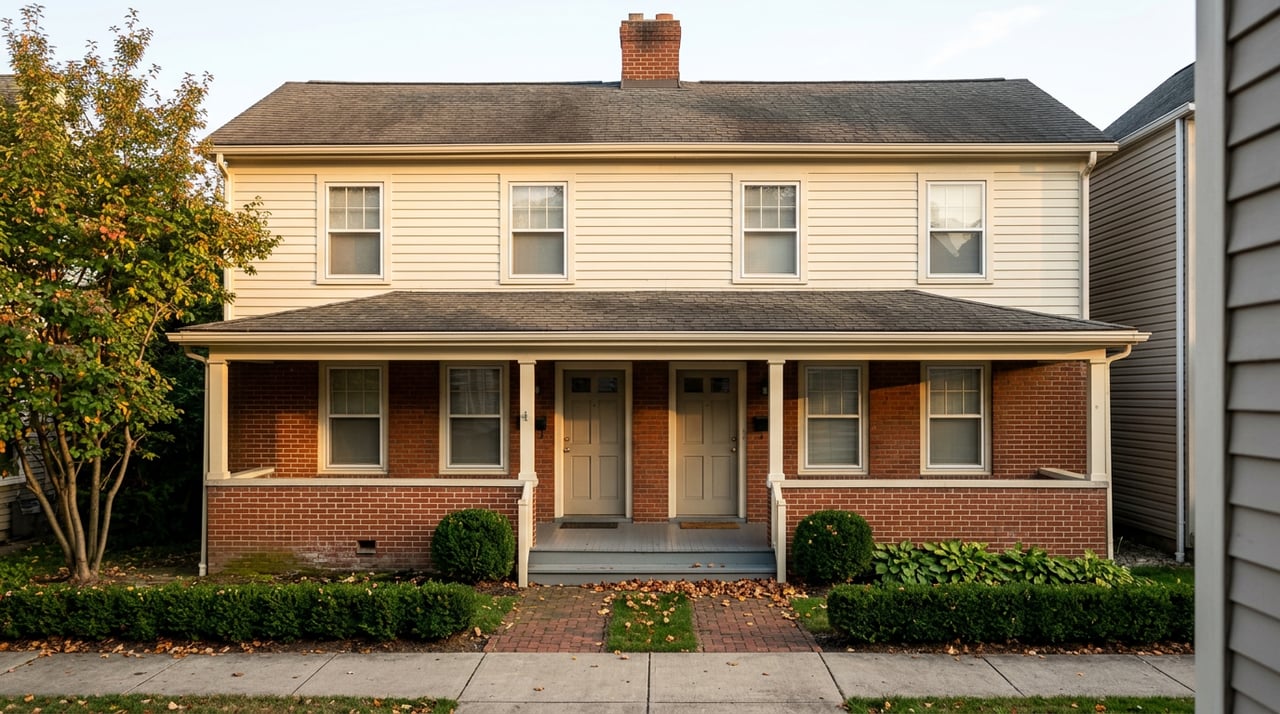
A buyer walking through an 1890s two-family on Flower City Park and a buyer walking through a center-hall colonial in Pittsford are having two different conversations with their agent, even if the square footage and the school bus stop are nearly identical. One of those conversations now includes a state deadline that lands before Halloween.
The City of Rochester has run a renewable Certificate of Occupancy program since the mid-1970s, and for just as long, owner-occupied one- and two-family homes have been able to file for an exemption and skip the inspection cycle that applies to rental property. That exemption still exists. But this year, the city closed it for a specific slice of the market, and if you're buying, selling, or already holding a pre-1980 two-family inside city limits, the fine print changed under your feet.
Here's how the program has worked for decades. If you occupy a one- or two-family dwelling in the city, you can file an exemption request and skip the renewable C of O inspection. The same goes for a home occupied by your spouse, parent, child, or sibling, as long as you can show proof of the relationship and residency. That exemption isn't permanent. It has to be renewed every three years, and if the occupancy situation changes, so does your obligation.
For a lot of small landlords, this exemption was the whole game. Move a family member into the second unit, file the paperwork, and the city's inspector never comes through the door.
New York State passed Public Health Law 1377 as part of the 2023-2024 state budget, but it didn't take effect until November 3, 2025. The law created a statewide Lead Rental Registry for rental buildings with two or more units, built before 1980, sitting inside a designated community of concern. Rochester is one of 25 such communities named statewide, alongside cities like Buffalo, Syracuse, and Utica.
Rochester already had a head start. Its own Lead-Based Paint Poisoning Prevention Ordinance passed in December 2005 and took effect July 1, 2006, making it one of the first municipal lead programs in New York State. Because of that history, the city folded the new state requirements directly into its existing renewable C of O process instead of building a separate system from scratch.
The practical result for owner-occupied two-families is what changed. Under the city's updated guidance, two-unit properties occupied by the owner or an immediate family member are no longer eligible for a full exemption or waiver from the renewable C of O requirement if the building was built before 1980 and sits inside the city's Lead Paint High-Risk Area. The city's own page on the 2026 changes states it plainly:
two-unit properties in this situation are "no longer eligible for a full exemption or waiver from the City's renewable C of O requirements."
That's the loophole closing. If your two-family checks both boxes, pre-1980 construction and high-risk area location, family occupancy alone no longer gets you out of the inspection cycle.
| Before 2026 | Now (if pre-1980 and in the High-Risk Area) | |
|---|---|---|
| Owner or family occupies both units | File exemption, renew every 3 years, no inspection | Exemption no longer available; C of O inspection required |
| Inspection includes lead dust wipe testing | Only if a visual check flagged deteriorated paint | Required proactively for every unit |
| Compliance deadline | Tied to individual renewal cycle | Active C of O required by October 1, 2026 |
Today is September 10, 2026. The first round of state certifications under PHL 1377 is due October 1, 2026, which gives affected owners a few weeks, not months, to sort out where their property stands. Owners of impacted buildings were mailed an official notice on March 31, 2026, giving them roughly six months to act. If that notice landed on a property you're about to buy or sell, the clock started before you signed anything.
Missing the deadline doesn't just mean a letter in the mail. The city has said impacted properties without an active C of O in place by October 1 will face additional enforcement measures, on top of whatever the state registry itself requires.
The inspection cycle length has always depended on building size, and that logic matters if you're evaluating a two-family versus a four-unit. According to Local Housing Solutions, buildings with three or more rental units go through a C of O inspection every three years. One- and two-unit buildings were on a six-year cycle, longer, because smaller buildings were assumed to be lower risk.
That assumption got revised in 2013. After the city reviewed several years of violation data and found that 91 percent of children with elevated blood lead levels lived in smaller buildings, the city council amended the ordinance so that one- and two-unit buildings with a prior lead violation inside the High-Risk Area renew every three years instead of six. The 2026 changes extend that same three-year, full-testing standard to owner-occupied two-families in the High-Risk Area that used to be exempt entirely.
The state registry itself draws a hard line here. PHL 1377 only applies inside 25 named "communities of concern," a list that includes Rochester along with cities like Buffalo, Syracuse, and Utica. Pittsford, Fairport, Brighton, and Victor aren't on that list, and neither is any other Monroe County suburb. A two-family in one of those towns simply isn't part of the registry this law created, regardless of its age. The compliance layer described here is a City of Rochester story, and it's one more reason a buyer weighing a Rochester two-family against a suburban single-family needs the comparison to include more than price per square foot.
The city has also raised the stakes around C of O compliance in other corners of a transaction. In city tax foreclosure sales, if the winning bidder owns other city property with open code violations or without a current C of O, the city gives them 15 days to clear it before the deed goes unrecorded and the $5,000 deposit is forfeited. That's a different transaction type than a typical resale, but it shows how seriously the city treats an active C of O as a condition of holding property here at all.
One more date to track if you're closing on any C of O-related work: fees for licenses, building, electrical, and plumbing permits, along with the C of O itself, change effective July 1, 2026.
If you're buying, selling, or holding a two-family or larger property inside city limits, a few questions are worth asking before you get anywhere near a closing table:
None of these questions have obvious answers from a listing photo or a square footage number. They require pulling the property's specific history with the city's Bureau of Inspection and Compliance Services, which is exactly the kind of legwork that matters more here than in a suburb without this layer of oversight.
Does this affect a single-family home I want to live in myself? Single-family owner-occupied homes remain exempt from the renewable C of O requirement regardless of age or location. The change specifically targets two-unit properties in the High-Risk Area.
What if I'm buying a two-family built after 1980? PHL 1377 uses 1980 as its construction cutoff, a few years past the federal government's 1978 ban on consumer lead paint. A newer two-family isn't subject to this particular rule, though the general renewable C of O program can still apply depending on occupancy.
Where do I check if a property is inside the High-Risk Area? The city updated its High-Risk Area boundaries in 2026 using new Monroe County data, so a property's status can change even if nothing changed about the building itself. This is worth confirming directly with the city rather than relying on an older map.
Whether you're comparing a city two-family to a Pittsford colonial, or you already own rental property inside city limits and need to know exactly where you stand before October 1, this is the kind of detail that gets missed until it shows up at an inspection or a closing table. If you want someone who tracks these rules across both the city and the suburbs, and can tell you which ones actually apply to the specific address you're looking at, Amy Petrone and her team are ready to walk through it with you. Work With Us.
This article is general information, not legal, tax or financial advice. Consult a qualified professional about your situation.
October 15, 2026
October 8, 2026
October 1, 2026
September 24, 2026
September 17, 2026
September 10, 2026
September 3, 2026
August 27, 2026
August 20, 2026
When you hire us you get all the services and advantages of a big team plus the one-on-one customer service of a boutique firm. We take pride in our client relationships and our accessibility!